Weather of the Soul Series: Autumn Winds - The Sacred Art of Letting Go
From the Candle’s Glow
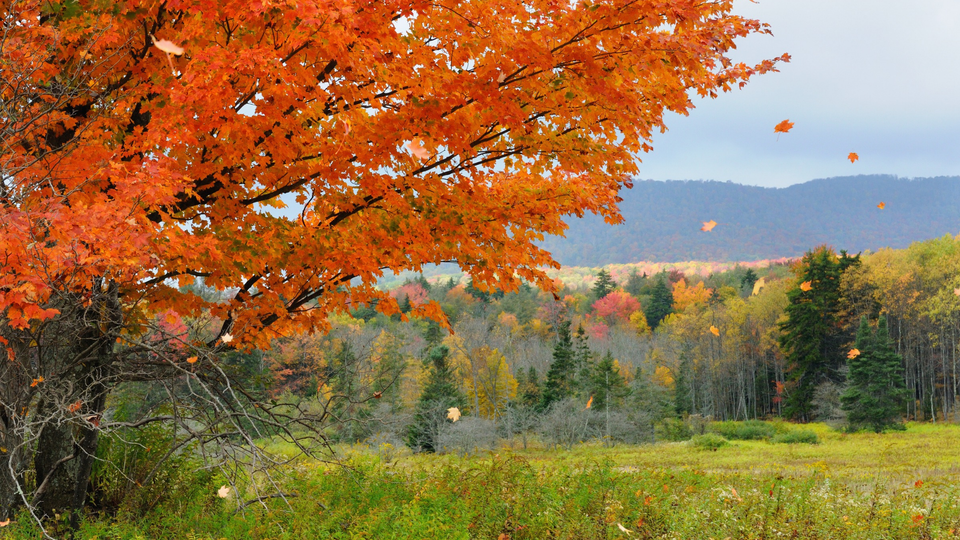
At one point in autumn, the air no longer simply feels different. It begins to move. The first cold fronts have passed. The mornings have grown cooler. The trees have begun trading their summer green for amber, rust, gold, and crimson. Then the wind arrives; it moves through the branches with a sound unlike summer's soft breezes. Leaves tremble overhead. Some hold tightly to their branches. Others loosen immediately, spiral through the air, and settle onto sidewalks, fields, rooftops, and forest floors. You can stand beneath a tree one moment and watch the world change around you. A gust comes, the branches sway, leaves begin falling, and something held for an entire season is suddenly released.
Autumn wind has always felt different to me. We can hear the season changing. The rustling leaves. The branches creaking. The wind is moving around the house's corners. An occasional leaf skitters across the porch. Summer often feels alive with sound—cicadas, thunderstorms, lawn mowers, children outside, and long evenings filled with activity. Autumn wind carries another language. It whispers of movement, endings, and things preparing to leave, and most importantly, it reminds us we don't always have to force ourselves to let go. Sometimes the season simply changes enough that what we have been holding is finally ready to fall.
The Science Behind Autumn Wind
Wind is simply air in motion, but the forces responsible for that motion are enormous. The sun does not heat Earth's surface evenly. Different surfaces absorb and release heat at different rates, creating pressure differences. Air naturally moves from higher-pressure areas to lower-pressure areas. That movement becomes wind. Earth's rotation, geography, friction, temperature differences, and weather systems all influence the wind's direction and strength.
In autumn, the contrast between warmer and colder air masses often grows as the Northern Hemisphere transitions away from summer. Cold fronts become more influential. Low-pressure systems move through. High-pressure systems settle behind them. The atmosphere becomes a landscape of shifting pressure and temperature. We feel those enormous atmospheric changes as something beautifully simple: wind against our skin.
Why Does Autumn Feel So Windy?
Autumn can bring noticeable periods of gusty weather because it is a transition season. Warm air hasn't completely disappeared, but colder air is increasingly moving south. Weather systems interact, cold fronts pass, and pressure changes; when a significant difference in atmospheric pressure exists across an area—a strong pressure gradient—winds can strengthen. That is why some of those wonderfully crisp autumn days arrive with branches swaying overhead and leaves racing across the ground.
The wind is part of a much larger atmospheric rearrangement. The season itself is moving. That is why autumn wind feels so symbolic. Spiritually, our lives also have times when the atmosphere begins to rearrange itself. Something is leaving, something else is approaching, and we are standing somewhere between the two.
The Spiritual Meaning of Wind
Across cultures and spiritual traditions, wind has long symbolized breath, spirit, movement, messages, freedom, and change. Wind is invisible, and we cannot see it directly. We know it exists because of what it touches. We watch grass bend, trees sway, clouds move, and water ripple. Leaves lift from the ground. We feel it against our faces. We hear it moving around us. There is something beautifully spiritual about that.
Not everything powerful is visible. Love isn't. Grief isn't. Intuition isn't. Memory isn't. Hope isn't. Neither is the force that moves a leaf across an entire field. We recognize these things because of what they change. Wind reminds us that invisible forces can still reshape our world.
Autumn Wind Is Different
Spring wind carries the beginnings. It moves seeds. It accompanies storms that awaken dormant earth. Summer wind brings relief from heat. Winter wind can feel sharp and exposing. Autumn wind seems to carry one message more clearly than the others: Release. The trees make that message visible. Leaves that spent spring emerging and summer gathering sunlight eventually reach the end of their work.
As daylight shortens and temperatures change, trees begin preparing for winter. Chlorophyll breaks down, green fades, and other pigments become visible. The tree begins forming a layer of cells near the base of each leaf stem called the abscission layer. Gradually, the connection between leaf and branch weakens. Eventually, the leaf falls. Sometimes gravity is enough. Sometimes rain helps. Sometimes the wind comes.
The Wind Does Not Create the Release
This may be one of autumn's most beautiful truths. The wind doesn't simply rip healthy leaves from trees. By the time many autumn leaves fall, the tree has already begun releasing them. Changes have been happening quietly and internally. Long before the wind arrives. The wind simply helps complete what the tree has already begun. How often does life work this way? We sometimes blame the final moment for an ending. The argument, the breakup, the resignation, the conversation, the decision, or the day we finally walked away. Often, the letting go began much earlier, perhaps months earlier, or even years. Something within us had already begun to loosen. The final moment was simply the gust that made the release visible.
When the Soul Has Already Begun Letting Go
We stop belonging to things long before we physically leave them. Relationships, friendships, jobs, dreams, identities, and versions of ourselves. We may continue showing up. Continue trying. Continue telling ourselves everything is fine. Somewhere beneath the surface, the soul has begun to abscise. The connection is changing. Something that once nourished us no longer does. Something that once felt like home begins feeling unfamiliar. Something we once fought desperately to keep begins feeling increasingly heavy in our hands. Still, we hold because letting go is frightening. We confuse holding on with loyalty. We confuse longevity with destiny. We convince ourselves that because something once belonged to us, it must belong to us forever. The trees know otherwise.
The Trees Do Not Call Their Falling Leaves Failures
Imagine if trees viewed autumn the way we often view endings. Imagine an oak looking down at its fallen leaves and thinking: I failed. I should have held on longer. Maybe if I had tried harder, they would have stayed. What will everyone think now that my branches are bare?
Nature does not carry this shame. The tree releases because release is necessary. Keeping every leaf through winter would require energy the tree cannot afford. Resources are withdrawn. The leaves fall, the tree rests, and nothing about this is considered a failure. It is survival. It is wisdom. It is seasonality. In our own lives, we should stop calling some things failures simply because they ended.
Letting Go Does Not Mean It Never Mattered
One of the hardest parts of release is believing that letting go somehow diminishes what came before. If I release this person, did I ever really love them? If I leave this dream behind, did all those years mean nothing? If I become someone different, was the person I used to be wrong? Autumn answers gently: No. The leaf mattered. It gathered sunlight. It helped nourish the tree. It provided shade. It existed exactly where it was meant to exist for an entire season. Then its work changed.
The leaf's eventual fall does not erase the summer it helped create. Neither do your endings erase your experiences. Something can have been sacred and still be complete. Something can have been real and still be over. Someone could have mattered deeply without being meant to walk beside you forever. You can be grateful for a season without trying to live there permanently.
Some Leaves Need More Wind Than Others
Watch the trees closely in autumn, and you will notice something. They do not release everything at once. Some leaves fall at the first breeze. Others remain through rainstorms. Some cling stubbornly through October and into November. Occasionally, certain species hold dead leaves through much of winter, a phenomenon known as marcescence.
Nature itself does not release according to one universal schedule, and neither do we. There are things we release easily. Other things we carry far longer. A memory may loosen quickly. A grief may remain for years. One relationship may become easy to release while another leaves echoes throughout an entire lifetime. No spiritual prize comes from letting go the fastest. Healing is not a race toward detachment. Sometimes the soul needs another season before it is ready.
When the Wind Takes What We Were Still Holding
Of course, not every ending happens when we feel ready. Sometimes life changes before we have decided to release anything. Someone leaves. A loved one dies. A job ends. A friendship disappears. A door closes. A plan collapses. The wind comes before we have loosened our grip. Those endings feel different. Anger, confusion, grief, and resistance may follow. We may spend months trying to understand why something was taken from us.
Autumn does not ask us to pretend those losses are beautiful. Some aren't; some hurt, some leave us standing beneath suddenly bare branches, wondering what happened to the world we knew. Even then, nature offers another truth. Bare does not mean dead.
The Courage of the Bare Tree
After the autumn wind has taken the leaves, the tree looks vulnerable. Everything that once covered it is gone. Its shape becomes visible. Every branch, every bend, and every scar. Nothing is hidden. Some seasons of our lives feel like this. We lose the things we used to identify ourselves by. The relationship, the role, the plan, the certainty, and suddenly we are left asking: Who am I without this? That question is vulnerable, but it is also freeing. When the leaves are gone, we finally see the structure underneath. Letting go does not always reveal emptiness. Sometimes it reveals us.
The Wind as Messenger
Another spiritual association with wind that I find especially beautiful is the idea of wind as a messenger, because wind travels. It moves through forests and fields, across lakes, between mountains, around houses, and through cities. We never know exactly where the air touching our face has traveled before reaching us. That thought is humbling.
The same wind moving through the branches above you will eventually move somewhere else. It reminds us that nothing exists completely in isolation. We are part of a movement much larger than ourselves. When the autumn wind brushes your face, you can treat it as a message. Not necessarily something supernatural. Simply a reminder: You are allowed to move. You are allowed to change. You are allowed to release.
What Are You Holding Because You're Afraid of the Empty Branch?
Sometimes we are not afraid of losing the leaf. We fear what remains after it falls. The empty space, the unanswered question, the unfilled evening, the silence after someone leaves, and the blank page after a chapter ends. We hold onto things because we do not yet know what will replace them. Autumn trees do not immediately replace their leaves because they stand bare. For months, that is important. Nature does not rush to fill every empty space. Sometimes emptiness has a purpose. Sometimes the space between what ends and what begins next is where roots deepen.
Release Creates Room
When leaves fall, they do not disappear from the ecosystem. They return to the ground. There, fallen leaves break down over time, returning nutrients to the soil and providing habitat for countless organisms. What the tree releases becomes part of what nourishes the landscape. What if our past works similarly? The things we release do not have to become meaningless. Experience becomes wisdom. Heartbreak becomes discernment. Mistakes become understanding. Grief becomes tenderness. Old dreams become foundations for new ones. The season may end, but what it taught us remains in the soil. Nothing truly lived is wasted.
An Autumn Wind Ritual for Release
The next time an autumn wind begins moving through the trees, go outside if you can. Stand somewhere safe beneath the open sky. Don't immediately reach for your phone. Listen. Feel the wind against your skin. Watch the leaves move. Notice which ones remain attached and which finally let go. Take a slow breath. Then ask yourself: What am I still carrying because it once belonged to me? What has already completed its season? What am I afraid will happen if I let it go? What might become possible if I finally opened my hand?
You do not have to force an answer, and you do not have to release something simply because you think you should. Instead, imagine yourself becoming like the tree. Trusting your own timing. Trusting your seasons. Knowing that when the connection has truly loosened, release will eventually come. Then, with your next exhale, picture the wind carrying away one thing you no longer need to hold so tightly. Not erasing it or not denying it. Simply allowing it to move.
The Glow We Carry Forward
Autumn wind strips leaves from branches, but it cannot take the roots. This may be the most important lesson. Life can remove things from us. Circumstances, plans, relationships, possessions, roles, or certainty. Beneath those things is something deeper. The self we have built. The wisdom we have gathered. The love we have given. The lessons embedded in us. Our roots. When we know where our roots are, change becomes less frightening. We understand that losing a leaf is not the same as losing the tree. Losing one chapter of ourselves does not mean losing the whole story.
Autumn wind teaches us that letting go does not have to be violent. Sometimes it begins quietly. A connection weakens. An old desire fades. The truth becomes clearer. Eventually the wind arrives. The leaf releases. The branch becomes lighter. We spend so much of our lives learning how to hold on. Hold onto relationships. Hold onto dreams. Hold onto memories. Hold onto identities. Hold onto the person we thought we were supposed to become.
Nature spends an entire season teaching the opposite lesson. Release is not always loss. Sometimes release is preparation. The tree lets go because winter is coming. It conserves what matters. It turns inward. It trusts that bare branches are temporary. Somewhere beneath the cold ground, life remains. Maybe we can learn to trust that too.
You do not have to carry every version of yourself into every season. You don't have to keep every relationship just because it once mattered. You don't have to keep every dream simply because you once wanted it. You are allowed to change. You can loosen your grip. You are allowed to become lighter. When the time is right, you may not know exactly how to let go. You only have to stop holding quite so tightly. The wind will know what to do from there.
By Candlelight,
HN Staples
"The tree does not chase the leaves the wind carries away. It trusts that what falls has finished its season—and what remains is still rooted." — HN Staples

Comments ()