Constellations as Ancient Storytelling: The Sky Humanity Never Stopped Reading
From the Candle’s Glow
Long before books were written or stories were inked onto paper, humanity looked upward. Before cities glowed with artificial light, the night sky stretched endlessly above our ancestors—vast, dark, and alive with meaning. They gathered around fires beneath the stars and searched the heavens for understanding. In those constellations, they found gods, hunters, mothers, lovers, monsters, animals, warnings, and hope. The sky became humanity’s oldest storybook.
Even now, thousands of years later, there is something sacred about standing beneath the stars and feeling small in the most comforting way possible. The constellations still whisper to us, even if we no longer know all their names. Somewhere deep within us, I think we remember what it once meant to live by the sky.
I have always felt drawn to the stars. Even as a child, I would stare upward and feel as though the universe held something just beyond understanding—something ancient, comforting, and alive. Maybe that longing is part of being human, or maybe some of us are simply born with our hearts tilted toward the cosmos.
The more I’ve grown, healed, and searched for meaning in my own life, the more I’ve realized that the stars were never just decorations in the night sky. They were maps, mirrors, and stories. They reminded humanity who we were, where we came from, and how deeply connected we are to something far greater than ourselves. I believe they still do.
The Sky Was Humanity’s First Library
Imagine life before electricity, before phones, before constant noise. Nightfall would arrive slowly, wrapping the earth in darkness while the stars emerged one by one overhead. Ancient people did not see the sky the way many of us do now—as background scenery. They studied it, relied upon it, and revered it.
The stars helped people navigate oceans, predict seasonal changes, track harvests, and understand the passing of time. Entire civilizations aligned temples, pyramids, and sacred sites with celestial events. The heavens became intertwined with survival itself. Beyond practicality, humans also needed meaning, so they created stories.
The constellations became a way to explain the mysteries of existence. Why did the seasons change? Why did storms arrive? Why grief existed. Why does love endure? Why did the world feel both beautiful and frightening at the same time?
Each culture looked at the same stars and saw different stories reflected back. The Greeks imagined Orion the hunter pursuing the heavens forever. The Egyptians connected the stars to gods who guided souls into the afterlife. Indigenous peoples across the world carried star knowledge through oral traditions, weaving celestial teachings into their understanding of nature, ancestry, and spirit.
What fascinates me most is that these stories reveal something timeless about humanity itself. Across centuries and continents, people looked upward searching for connection. Searching for themselves and in many ways, we still are.
Constellations as Mirrors of Human Emotion
What makes constellation stories endure is not simply their mythology—it is their emotional truth. The stars became a canvas upon which humanity projected its deepest fears, desires, and hopes. The stories hidden in the constellations are often stories of longing, transformation, sacrifice, courage, heartbreak, rebirth, and destiny. In other words, they are stories about being human.
Perhaps this is why we continue to feel moved by the night sky even in modern life. Somewhere inside us, we recognize that these ancient stories still live within our own experiences. We know what it feels like to lose ourselves and search for direction. We know what it feels like to grieve, to love, to hope for something beyond our understanding. We know what it means to stand in darkness looking for light.
The constellations remind us that humanity has always carried these same emotions. We are not the first people to question our purpose beneath the stars, and we will not be the last. There is something deeply comforting about that.
Why We Still Look Up
Even in an age of technology and endless distraction, people still stop to watch meteor showers. We still photograph full moons. We still make wishes on shooting stars. Why? Because wonder is ancient.
The stars reconnect us to something quieter than modern life allows. They remind us that there is a world beyond deadlines, anxiety, and constant noise. A world that moves slowly. Patiently. Eternally.
When you stand beneath the night sky, perspective changes. Your worries may still exist, but they soften against the vastness of the cosmos. The stars remind you that life is both fleeting and miraculous. That your existence, however small it may feel sometimes, is still part of something extraordinary.
I think many sensitive souls are naturally drawn to the stars because they awaken remembrance. They stir something ancient within us—a longing for mystery, meaning, and connection. For some, the stars feel like home.
The Spiritual Nature of Stargazing
There is a reason so many spiritual traditions include the sky in their practices. Looking upward naturally pulls us out of ourselves. It quiets the mind, opens the heart, and expands perspective. Stargazing becomes more than observation—it becomes reflection.
The stars teach patience, humility, and continuity. The same constellations visible to us today were seen by people thousands of years ago. Empires rose and fell beneath these same skies. Ancestors loved, grieved, dreamed, and wondered beneath them, too. Sometimes I think healing begins when we remember we are part of a much larger story. Not insignificant, forgotten, but connected.
The sky reminds us that life moves in cycles. Darkness does not last forever. Light always returns. Seasons change. Stars disappear with dawn only to return again at nightfall. There is comfort in celestial rhythm.
Reclaiming Wonder in Modern Life
Perhaps one of the greatest losses of modern life is how disconnected we have become from the night sky. Light pollution dims the stars. Busy schedules keep us indoors. Many people rarely pause long enough to truly look upward anymore. Wonder is still available to us.
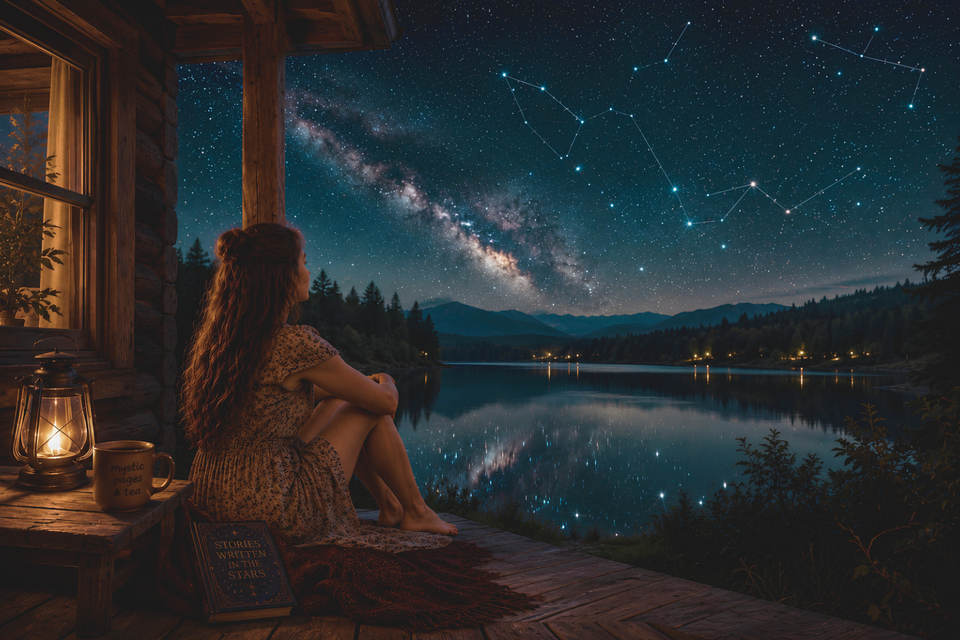
You do not need expensive equipment or deep knowledge of astronomy to reconnect with the stars. Celestial living can begin simply. Stepping outside at night. Watching the moon rise. Learning the names of constellations. Sitting quietly on a porch beside a lake while the stars reflect on still water. Allowing yourself to feel awe again because awe heals something within us. It reminds us that life is not only meant to be productive—it is also meant to be experienced. The stars call us back to presence.
The Glow We Carry Forward
I think the constellations endure because humanity needs stories almost as much as it needs light. The night sky has always offered both. When our ancestors looked upward, they did not only see stars. They saw meaning woven into darkness. They saw proof that even the vast unknown could hold beauty. They saw stories that helped them survive grief, navigate uncertainty, and understand their place within the universe. Perhaps we are still doing the same today.
Every time we pause beneath the stars, we become part of a tradition older than memory itself. We join countless generations who once stood beneath these same constellations, asking the same quiet questions: Who are we? Why are we here? What does it all mean?
Maybe the stars were never meant to answer us directly. Maybe they were simply meant to remind us to keep wondering. Perhaps that wonder is one of the most sacred things we carry.
By Candlelight,
HN Staples
“The stars became humanity’s first stories because even in darkness, people have always searched for light.” —HN Staples

Comments ()