The Magic of Ostara: When the Earth Remembers How to Bloom
From the Candle’s Glow
There is a quiet moment each year when the world pauses between two breaths—winter’s last whisper and spring’s first full exhale. It is a moment so subtle that if we are rushing through our days, we might miss it entirely. But the earth never misses it.
The light begins arriving earlier each morning. The evenings stretch just a little longer. Tiny green shoots push through soil that only weeks before was cold and still. Even the birds seem to know—their songs return like soft declarations that life is waking again.
This sacred moment is Ostara. The Spring Equinox is a threshold, a doorway where darkness and light stand in perfect balance. For one brief day, neither dominates the other. They coexist in harmony, reminding us that the world itself moves in cycles of balance, growth, rest, and renewal. And just like the earth, our souls move through these cycles too.
Ostara invites us to step gently into the light again—not by abandoning the wisdom winter gave us, but by carrying it forward into the season of becoming.
What Is Ostara?
Ostara is celebrated during the Spring Equinox, which occurs between March 19 and March 21 in the Northern Hemisphere. On this day, the sun crosses the celestial equator, creating nearly equal hours of daylight and darkness across the globe.
For ancient cultures, this balance was deeply sacred. Long before modern calendars, people watched the movement of the sun, moon, and stars to understand the rhythm of the earth. The Spring Equinox marked a turning point—the moment when the sun’s strength began to overtake winter’s hold.
The name Ostara is believed to come from the Germanic goddess Eostre, a deity associated with dawn, fertility, and renewal. Though historical records of her are few, her legacy lives on in many symbols we still associate with spring today—eggs, rabbits, blooming flowers, and the celebration of life returning to the land.
Across cultures, this seasonal shift was honored with festivals celebrating fertility, balance, and rebirth. Farmers prepared their fields. Communities gathered to welcome the sun's returning warmth. Seeds were planted not just in the soil, but in hopes for the coming year. Ostara reminds us that life always returns. Even after the longest winters.
The Spiritual Meaning of Ostara
If Imbolc is the spark of inspiration, Ostara is the first visible sign that the spark has taken root. The earth itself demonstrates this truth. Beneath the soil, seeds have been waiting patiently—gathering energy, sensing warmth, preparing for the moment when conditions are right to grow. Ostara represents this exact moment of emergence.
Spiritually, this sabbat asks us to reflect on several questions:
- What dreams have been quietly forming within me?
- What intentions am I ready to nurture into reality?
- Where in my life am I seeking greater balance?
The energy of Ostara is one of possibility. Not the full bloom of summer, but the hopeful promise that growth is underway.
This season invites us to:
- Restore balance between work and rest.
- Begin nurturing new creative ideas.
- Open ourselves to fresh opportunities.
- Reconnect with joy and curiosity.
The equinox reminds us that light and darkness both have purpose. Just as seeds require darkness to grow roots, we too need periods of reflection before transformation. Ostara celebrates the beauty of that balance.
The Ancient Symbols of Ostara
Many symbols of modern spring traditions have roots that stretch back thousands of years. These symbols are not just decorative—they carry deep spiritual meaning tied to the cycle of life.
Eggs — Seeds of Possibility
Eggs have long symbolized fertility, creation, and new life. Their smooth shells protect the fragile beginnings of something yet to be born.
Spiritually, eggs remind us that potential often appears small and delicate at first. The dreams we nurture today may seem quiet or uncertain, but within them lies tremendous possibility.
Rabbits and Hares — Fertility and Abundance
Rabbits and hares have been associated with spring festivals across Europe and the British Isles for centuries. Their ability to reproduce quickly made them symbols of fertility, abundance, and the rapid growth of life in spring.
They remind us that once life begins to return, it does so quickly and energetically.
Spring Flowers — Hope Rising from the Soil
Crocuses, daffodils, tulips, and snowdrops often bloom while frost still lingers on the ground. Their resilience reminds us that growth does not require perfect conditions—only the courage to rise.
Flowers are living reminders that beauty can emerge even after hardship.
The Sun — Returning Strength
After months of short days, the sun’s light becomes noticeably stronger around the equinox. This returning warmth represents vitality, energy, and forward movement.
The sun’s presence at Ostara is not overpowering yet—but its power is unmistakable.
Honoring Ostara in Everyday Life
One of the most beautiful aspects of Ostara is that its magic does not require elaborate rituals. It lives naturally within the simple acts of noticing, tending, and nurturing.
Here are a few ways to honor this sacred turning of the season.
Plant Seeds — Literally and Spiritually
Planting seeds is one of the most powerful Ostara rituals. Whether you plant herbs, flowers, or vegetables, the act symbolizes your willingness to nurture growth in your life.
You can also write intentions on small pieces of paper and place them beneath the soil as symbolic seeds for the future.
Cleanse and Refresh Your Space
Spring cleaning has deep spiritual roots. Clearing clutter from our homes mirrors clearing stagnant energy from our lives.
Open windows. Let fresh air circulate. Rearrange a small corner of your home. These small acts create space for new energy to enter.
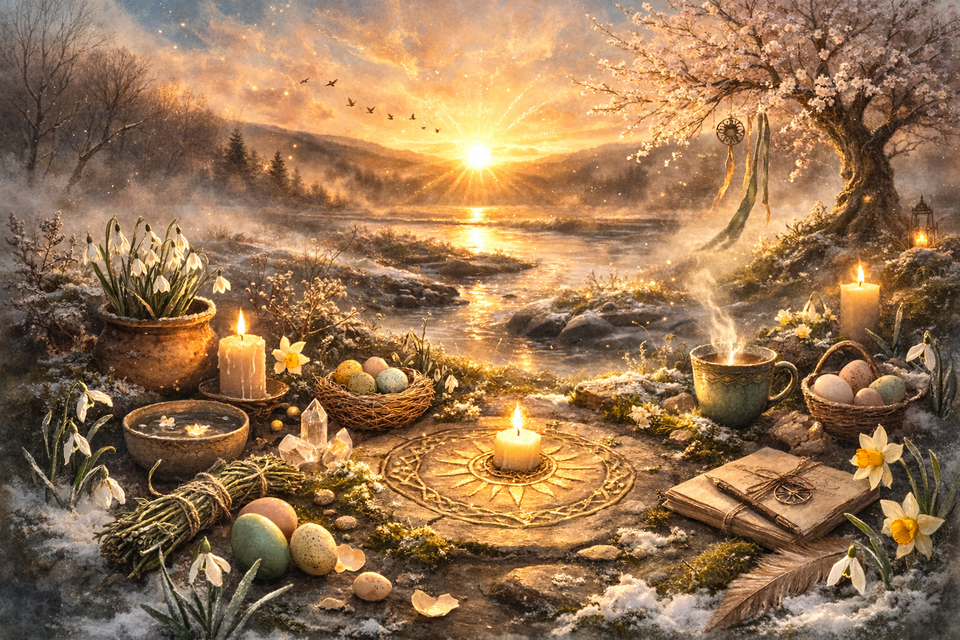
Create an Ostara Altar
A seasonal altar can serve as a gentle focal point for reflection.
You might include:
- Painted eggs
- Fresh flowers
- Green or yellow candles
- Crystals such as rose quartz, citrine, or clear quartz
- Seeds or small plants
This space does not need to be elaborate. It only needs to feel meaningful.
Spend Time Outdoors
Perhaps the most powerful Ostara ritual is simply being present in nature.
Walk through a park. Sit beneath a tree. Notice the scent of the air and the sounds of birds returning. The earth itself becomes a teacher during this season.
The Creative Energy of Ostara
For writers, artists, dreamers, and makers, Ostara carries a particularly inspiring energy.
Winter often invites introspection. Ideas form quietly in the stillness of the colder months. But as the equinox arrives, something shifts. Inspiration begins with asking to move, to grow, to be expressed. This is the season when many creative projects begin to take shape.
It is a time to start writing the story, sketching the design, planting the garden, and beginning the journey. Not perfectly, but courageously. Ostara reminds us that creation rarely begins fully formed. It begins with a seed.
Finding Balance Within Yourself
The equinox is not only about the balance of the sun—it is also a moment to consider balance within ourselves.
- Where have you been giving too much energy?
- Where have you been withholding it?
- What parts of your life feel aligned, and which feel out of harmony?
Ostara gently encourages recalibration. Balance does not mean perfection. It means allowing space for both productivity and rest, joy and reflection, action and patience. Just as the earth holds both shadow and sunlight, we too are meant to carry both.
The Glow We Carry Forward
Each year, Ostara arrives quietly—yet its message is powerful.
Life returns. No matter how long winter felt, no matter how heavy the darkness seemed, the earth always remembers how to bloom. So do we.
Ostara reminds us that growth rarely happens all at once. It happens gradually, tenderly, sometimes almost invisibly at first. Once it begins, the transformation becomes undeniable.
The light is returning. The soil is warming. Somewhere within you, something beautiful is beginning to grow.
By Candlelight,
HN Staples
“Spring is not the absence of winter—it is the courage of life returning anyway.” —HN Staples