Choosing Humanity in a Divided Time
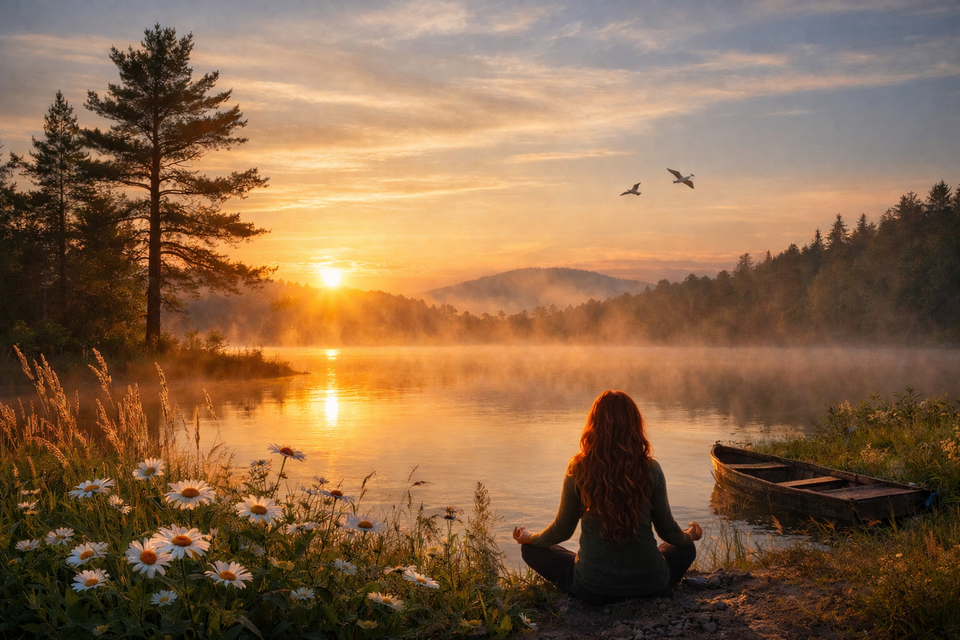
We are living in a time when the world feels louder than the soul. Opinions move faster than understanding, and reaction often replaces reflection. Many of us wake each day carrying a quiet heaviness—an unspoken grief for a world that feels increasingly fractured, hurried, and hardened.
There is pressure everywhere to choose sides, to define ourselves by what we oppose rather than what we hold sacred. Yet beneath all the noise, something more profound is stirring. A longing. A remembering. A call to return to what is honest and true within us.
Peace does not arrive through force or fear. It does not grow in spaces ruled by hatred or division. Peace begins when we slow down long enough to listen—to our own hearts, to one another, and to the wisdom that has always lived beneath the surface of our lives.
This is an invitation to step outside the constant pull of judgment and reaction. To pause. To breathe. To consider what truly matters when everything else is stripped away—beyond politics, beyond opinions, beyond the stories we are told to carry.
In times like these, choosing humanity is not passive—it is powerful. It begins not with changing the world, but with coming home to ourselves.
Beyond Sides, Beyond Systems
We are often taught to believe that division is inevitable, that disagreement must lead to distance. Diversity of thought is not what tears humanity apart. What fractures us is the loss of compassion, the refusal to listen, and the belief that being right matters more than being kind.
Governments are systems. Policies are written words. Structures are built by human hands.
People are living, breathing stories—shaped by experiences, wounds, hopes, and histories that cannot be reduced to a single viewpoint.
We can acknowledge complexity without hardening our hearts. We can hold conviction without hatred. We can disagree without dehumanizing one another. These are not weaknesses—they are the foundations of a society rooted in dignity.
When we allow fear to replace curiosity, when pain turns into anger instead of understanding, we lose sight of our shared humanity. Loss ripples outward—into families, communities, and the collective spirit of the United States and our world.
Coming Back to Our Own Truth
Peace—real peace—does not begin in institutions or headlines. It begins quietly, within the individual. Within the places we have not yet tended. Within the truths we avoid because they ask us to slow down, soften, and take responsibility for our own healing.
Much of what we are witnessing in the world today is not only political or ideological—it is emotional and spiritual. It is the result of unhealed wounds being projected outward, searching for somewhere else to land.
We are all entitled to our opinions. When opinions harden into identity, when fear replaces empathy, and when hatred becomes easier than understanding, we lose our ability to see one another clearly.
If we want peace in our lives—and peace as a nation—we must be willing to ask harder questions than the ones being shouted across screens:
What am I carrying that has not yet healed? Where have I closed my heart to feel safe? Am I reacting from fear—or responding from truth?
Coming back to our own truth does not mean abandoning belief. It means grounding it in compassion. When individuals choose healing over projection, the collective begins to shift.
Peace arrives quietly. Person by person. Choice by choice.
Returning to What Is Simple and True
In a world that moves faster than the human nervous system was ever meant to endure, returning to simplicity is not regression—it is medicine.
Nature reminds us of truths we have forgotten. A tree does not rush its growth. A river does not argue with its path. The earth does not demand agreement—it simply continues.
When we step outside—into a forest, a field, a backyard, or beneath an open sky—we remember something essential: life is meant to be lived, not constantly defended. Nature does not ask who we voted for or what side we are on. It welcomes us exactly as we are.
Reconnecting with the natural world grounds us. It softens our anger. It reminds us that we belong—to the land beneath our feet, to our own bodies, and to one another.
Simple ways of living—walking without distraction, tending a garden, honoring the seasons, sitting in silence—bring us back to ourselves. When we come back to ourselves, we are less likely to lash out, less likely to dehumanize, and less likely to feed the cycles of hatred that fracture our communities.
Perhaps the path forward lies not in louder arguments but in quieter moments. In muddy boots. In open skies. In remembering that we are meant to live in relationship, not opposition.
Closing Reflections
In times like these, it can feel easier to retreat—to turn away from the weight of the world, to protect our hearts by growing numb. Numbness is not peace, and silence without reflection does not heal what has been broken. What heals is presence. What heals is remembrance. What heals is the quiet courage to stay open even when the world feels sharp.
We are living in an era where fear is often amplified faster than truth, where humanity is overshadowed by ideology. Yet beneath all of that noise, there is still a softer voice asking us to pause. To breathe. To remember that every life, every story, every heart matters.
We do not have to agree on everything to agree on this: compassion should never be conditional, and humanity should never be negotiable.
Let this moment be an invitation—to listen more deeply, to question without hardening, to choose empathy when it would be easier to choose judgment. May we trust our inner knowing—the quiet place within us that recognizes dignity and truth when it sees it.
If we are to move forward as a people, it will not be through louder voices or sharper divisions, but through a shared willingness to care again. To heal ourselves instead of projecting our pain. To soften instead of hardening. To remember that the heart, when listened to honestly, rarely leads us astray.
In a world pulling us apart, choosing humanity is a radical act of healing. And it is one we can choose—again and again.
By Candlelight,
HN Staples
“When we listen with the heart instead of the crowd, we remember who we are.” —HN Staples