Appalachian Folklore And Witchcraft: Whispers From The Mountains
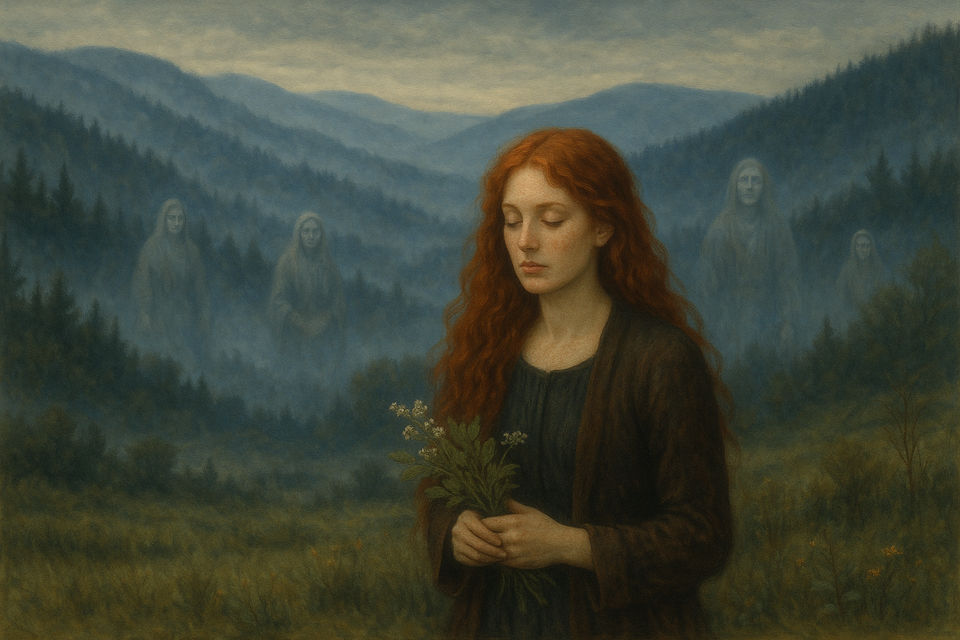
The Appalachian Mountains stretch like an ancient backbone across the eastern United States, their peaks rising through the mist like watchful sentinels. Within their valleys and hollows live stories—passed down through generations—that speak of spirits, remedies, curses, and the magic of the land itself. Appalachian folklore and witchcraft are not relics of the past; they are living traditions woven into the daily lives of those who have long called these mountains home.
Roots In The Mountains
Growing up in Tennessee, I have always felt the pulse of the Appalachians running close to me. The stories, songs, and quiet superstitions lingered in the background of daily life—reminders that the land itself holds memory. Appalachian traditions carry the fingerprints of many cultures: the Scots-Irish settlers who brought with them ballads, charms, and old-country “granny magic”; African traditions that shaped the region’s spiritual practices through root work and conjure; and Indigenous peoples whose deep knowledge of the land—plants, animals, and spirits—still lingers in the echoes of mountain streams. Out of this tapestry grew a unique mountain magic that reflects survival, reverence for nature, and the thin veil between seen and unseen worlds.
The Healers And The “Granny Witches”
At the heart of Appalachian witchcraft lies the figure of the granny witch. She was often the midwife, herbalist, and wise woman of her community. Her remedies might include poultices of comfrey for broken bones, teas of peppermint for stomach ailments, or whispered charms to ease a fever.
Yet her magic was not only medicinal—it was spiritual. Granny witches prayed over the sick, read signs in the weather, and carried Bible verses as protective charms alongside folk spells. Theirs was a practical witchcraft: a blend of old-world enchantment and mountain pragmatism. Even today, in Tennessee and beyond, you’ll find people who recall a grandmother or great-aunt who “knew things”—who had a way with herbs, who whispered prayers over burns or fevers, who carried a quiet power.
Plant Magic And Mountain Remedies
The Appalachian forest itself was a pharmacy and a temple. Folk healers knew which root to dig for protection, which leaf could draw out infection, and which flower held luck.
- Bloodroot was used for both dyes and healing.
- Ginseng, called “sang,” was considered both a powerful medicine and a source of income, carefully dug with ritual respect.
- Mullein leaves became makeshift torches and remedies for respiratory troubles.
- Witch hazel was prized for its cleansing and soothing properties.
It wasn’t unusual to hear about certain teas, poultices, or “mountain cures.” What might sound like superstition to outsiders was survival to those who lived deep in the hollers—wisdom carried down generation after generation.
Signs, Omens, And Superstitions
Life in the mountains was steeped in signs. A bird tapping on the window foretold death. A dream of a fish meant pregnancy. Dogs howling at midnight suggested a spirit passing through.
Even in Tennessee, many of these beliefs still ripple through daily life. Hearing whispers of warnings when crows gathered, or how certain dreams carried hidden meanings. The veil between the natural and supernatural felt thin, as though the mountains themselves were alive with messages.
The Witch And The Bible
One of the most fascinating elements of Appalachian witchcraft is its relationship with Christianity. For many, the Bible was both holy scripture and a spell book. Psalms were recited for protection, blessings, or healing, while verses could be carried like talismans.
I always found it powerful that people could weave faith and folk magic together so seamlessly. In homes, it wasn’t uncommon to see a Bible kept open on the family table—both as a declaration of faith and as a shield of protection.
Ghosts, Haunts, And The Supernatural
The mountains are rich with ghost tales. From spectral women wandering old coal camps to mysterious lights flickering along ridgelines, the supernatural feels as much a part of the Appalachian landscape as the pines and mist.
Even in my own life, I’ve heard plenty of ghost stories told in a hushed voice around kitchen tables—tales passed down as warnings, lessons, or just a way to remember that the dead are never far. These stories remind us that the past lingers, and that the veil is thin in the Appalachian mountains.
Appalachian Witchcraft Today
Though the old ways were often practiced in secret, they are being reclaimed and honored today. Modern practitioners—sometimes descendants of the very granny witches whispered about—blend traditional remedies with contemporary witchcraft. They carry forward the respect for land, ancestry, and survival, while reshaping the practice into something that resonates with the present.
For me, Appalachian folklore is not something distant—it’s part of my roots as a Tennessean. It has shaped my love for storytelling, my reverence for nature, and my belief in the unseen. In a world where technology often disconnects us from the land, mountain magic calls us back. It invites us to notice the crow’s call, the way fog clings to hollows, the herbs growing quietly by a stream.
By Candlelight,
HN Staples
"The mountains remember. The old songs and whispers still echo if you pause to listen. For those raised in the shadow of the Appalachians, folklore is not merely history; it is a living, breathing current of magic, woven into the roots of the land and the hearts of those who walk it." -HN Staples