An English Christmas: The Way My Hands Remember Winter
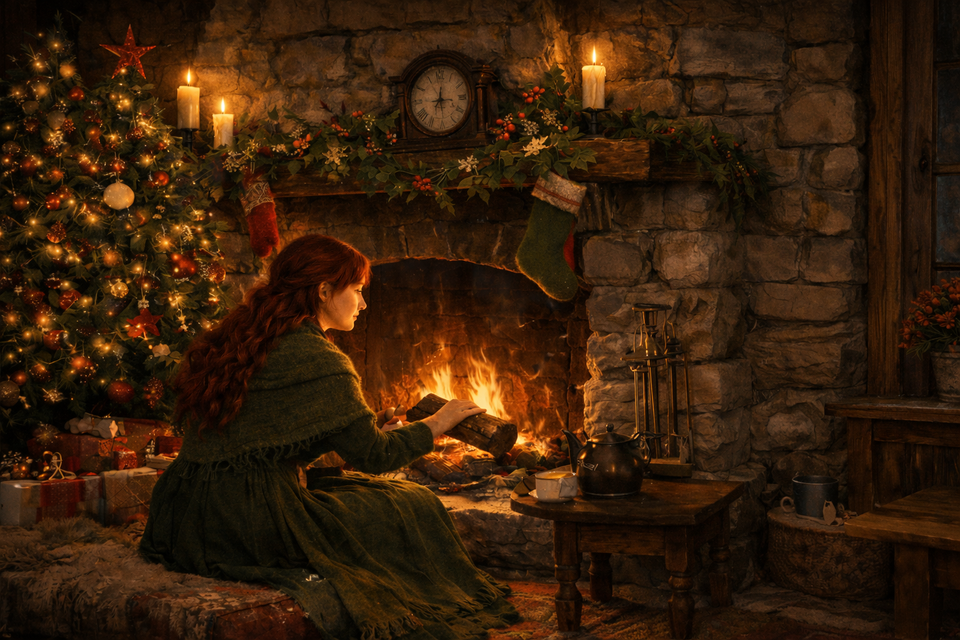
An English Christmas feels as if my body knows it before my mind does. There is no single memory I can point to—no childhood home in the English countryside, no specific hearth I can claim as my own. And yet, when winter deepens and the days grow shorter, I find myself moving through December in ways that feel instinctual. Familiar. As though I am following a map drawn long before I arrived here.
English ancestry runs quietly through my lineage, and with it comes a reverence for warmth, restraint, and the sacredness of the everyday. An English Christmas does not announce itself loudly. It settles in. It waits. It listens. This is the kind of Christmas that lives in pauses.
The Hearth I Always Build
Every year, without thinking, I build my Christmas around warmth. Candles come first. I place them slowly, deliberately, as though each flame matters—because it does. I am drawn to the hearth, even if it is symbolic rather than literal. The idea of fire at the center of the home feels essential to me, not decorative.
In English tradition, the hearth was the heart of winter life. It was where families gathered, where stories were told, where silence was shared. At Christmas, it became sacred ground.
The Yule log—a tradition later embraced in Victorian England—was not about spectacle. It was about continuity. One flame carried forward into the following year. One winter, speaking quietly to the next. When I light candles at Christmas, it feels like the same gesture. As though I am continuing something rather than creating it.
Decorating the Way My Ancestors Might Have
I do not decorate quickly. I never have. Greenery is chosen with care—holly, evergreen branches, ivy when I can find it. Not because it is traditional, but because it feels right. English Christmas greenery was never just about beauty. Holly was protection. Ivy was endurance. Evergreens were reminders that life persists even now.
As I bring these things into my home, I feel grounded. Anchored. As though I am inviting winter to sit with me rather than rushing it away. There is a quiet magic in this kind of decorating. Nothing excessive. Nothing hurried—just intention.
A Christmas That Doesn’t Rush Me
What I love most about an English Christmas is that it permits me to slow down. There is no pressure to perform joy. No insistence on constant celebration. Winter is allowed to be winter. Evenings are long. Silence is welcome. Rest is respected.
I find myself drawn to simple rituals—tea in the evening, books opened slowly, lights dimmed earlier than usual. These are not things I plan. They happen naturally, as though guided by something older than habit. Perhaps this is how my ancestors lived winter—by leaning into it rather than resisting it.
The Victorian Echo I Feel Every Year
I have always been drawn to the Victorian shaping of Christmas—the way it softened the season into something intimate and reflective. Handwritten cards. Candlelit rooms. Quiet music. Gifts chosen with thought rather than excess.
There is something deeply comforting about that version of Christmas. It does not demand happiness. It invites presence. This is the Christmas I recreate without realizing it—the one where warmth matters more than decoration, and connection matters more than noise.
A Season That Listens Back
An English Christmas does not overwhelm me. It meets me where I am. It feels like a season that understands when to be quiet. When to sit beside me rather than pulling me forward. When to let memory surface without forcing it into words.
Some nights, it feels as though winter itself is listening—through the firelight, through the greenery, through the stillness that settles once the world slows.
Closing Reflections
An English Christmas reminds me that ancestry does not always arrive as stories or names. Sometimes it comes as instinct. As a preference. As the way your hands move through December without instruction.
It teaches me that home can be something we remember into being. That warmth is inherited. That tradition lives not in repetition, but in recognition. And each year, as candles flicker and winter deepens, I feel it again—that quiet certainty that some part of me has done this before.
By Candlelight,
HN Staples
“Some traditions are not learned. They are remembered.” —HN Staples