A Scottish Christmas: Traditions, Folklore & Winter Magic From the Highlands
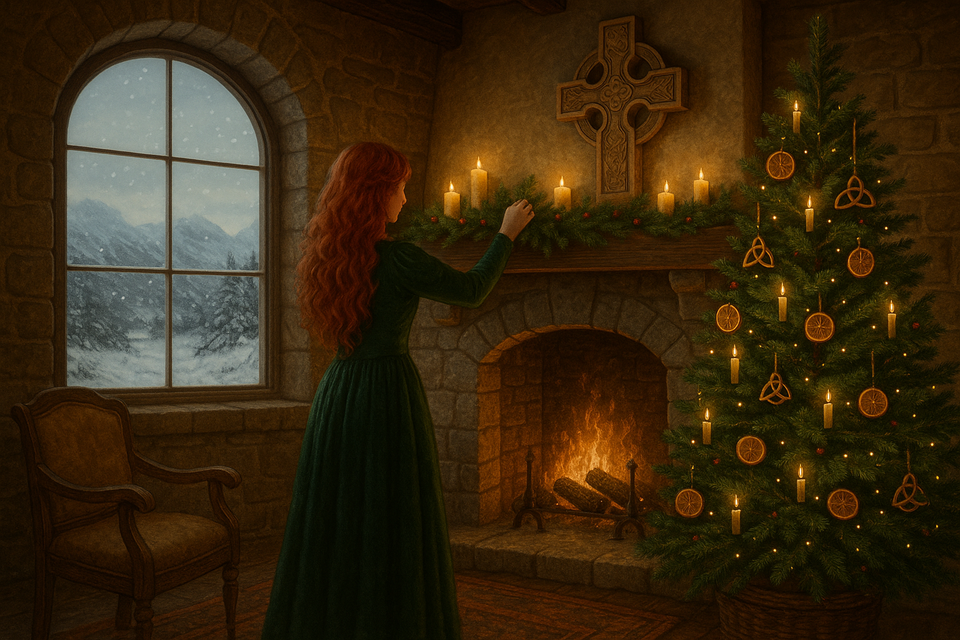
Every December, as I begin decorating my home for Christmas, something ancient stirs within me. It rises quietly—like a memory carried through generations, settling into the pine-scented air of my living room. The glow of candlelight, the evergreens draped with care, the soft garlands across my mantle, all of it feels like a homecoming to a place I have never lived, yet somehow deeply remember.
There is a unique kind of magic in honoring my Scottish roots by preparing my home for winter. The evergreens echo ancient Highland rituals. The candles mimic the Yule fires once lit to call the light back. The rustic touches remind me of stone cottages tucked along misty hillsides.
Decorating becomes a portal—a way to step into my ancestors' stories, a way to let their winter wisdom breathe in my modern home. Through every bough of pine and every flicker of flame, I feel connected to the lineage that lives quietly beneath my skin.
A Holiday Once Lost: When Christmas Was Banned in Scotland
For nearly 400 years, Christmas was not widely celebrated in Scotland.
During the 16th and 17th centuries, the Scottish Reformation viewed Christmas as a Catholic holiday and banned it entirely. Scots worked through December 25th as though it were an ordinary day. Quiet gatherings happened behind closed doors, but public celebration was forbidden. It wasn’t until 1958 that Christmas became a recognized public holiday in Scotland.
This long absence shaped Scotland’s modern holiday season—intimate, soulful, deeply tied to community and winter ritual rather than commercial fanfare. Christmas today carries the echoes of what survived in whispers and hearth fires.
Yule: The Ancient Heart of Scottish Winter
Before Christmas ever reached Scotland, there was Yule—a Norse and Celtic midwinter celebration honoring the rebirth of the sun.
Yule centered around:
- The return of daylight.
- The renewal of life.
- And the resilience of the human spirit in the darkest season.
The Yule Log
A massive log—or later, a symbolic smaller one—was burned to invite warmth, protection, and good fortune. Some Highland families kept embers from the log all year as a charm against misfortune.
Even in my own home, each year when I decorate my mantle with a candlelit Yule log, I feel as though I’m participating in a ritual far older than myself—something my ancestors may have done centuries ago beneath the same dark December skies.
Hogmanay: Scotland’s True Winter Celebration
Because Christmas was banned for so long, Hogmanay—New Year’s Eve—remains the most crucial winter celebration in Scotland.
First-Footing
At midnight, the first person to cross your threshold brings luck for the new year. Traditionally, this person should be:
- Tall
- Dark-haired
- And carrying symbolic gifts such as coal, whisky, or shortbread.
The superstition dates back to the Viking era, when red hair was associated with invaders—though today it’s taken lightly and with humor.
Fire Festivals
Scotland celebrates with torches, bonfires, and fire rituals meant to clear the old year and welcome the new. Even now, when I watch candles flicker through my decorated home, I think of these ancient flames illuminating the winter night.
“Auld Lang Syne”
Written by Robert Burns, it has become the world’s New Year song—a Scottish gift to the globe.
Scottish Christmas Foods: Warm, Hearty, and Rooted in Tradition
Scotland’s holiday table is rich with meaning and comfort:
Roast Venison & Winter Game - Tied to Scotland’s wild landscape.
Black Bun - A dense fruitcake baked in pastry—traditionally gifted at Hogmanay.
Clootie Dumpling - A spice-rich pudding wrapped in cloth and simmered for hours, passed down through generations.
Shortbread - A Christmas essential symbolizing celebration and hospitality.
Whisky - A warming ritual that honors land, culture, and kinship.
Winter Folklore of the Highlands
Scottish winter is alive with myth:
The Cailleach - The winter goddess who shapes mountains and controls storms. Her presence is felt in every icy wind and snow-laden night.
Guisers - Early versions of carolers who dressed in disguise to ward off spirits.
Candles in the Window - A light guiding travelers home through the cold and dark.
Handsels - New Year gifts offering blessings for prosperity.
These traditions weave together the magic of land, myth, and memory.
Christmas in the Highlands Today
Modern Scottish Christmas blends centuries-old customs with the warmth of present-day celebration:
- Stone cottages adorned with evergreens.
- Fires burning in centuries-old hearths.
- Villages glowing beneath strings of lights.
- Caroling, ceilidhs, and community gatherings.
- Snow drifting across moors and lochs.
It’s a holiday that feels timeless—rooted in history yet alive with quiet wonder.
Closing Reflections
As I place the final touches of Christmas decorations throughout my home—the pine branches over the windows, the candlelit Yule log on my mantle, the subtle nods to the Highlands tucked into each cozy corner—I feel something settle softly inside me.
A warmth that is more than fire. A nostalgia deeper than memory. A homecoming shaped by roots older than my name. Decorating for Christmas has become my way of honoring where I come from.
Every evergreen sprig, every glowing candle, every winter ritual carries the heartbeat of the Scottish ancestors who walked snowy hills and lit their own Yule fires long before I ever existed.
In blending these traditions into my present life, I create a home that feels both ancient and new—a sanctuary of winter magic, heritage, and quiet remembrance.
May your season, too, be touched by this sense of belonging—the kind found in candlelit rooms, in evergreen garlands, in the stories passed down through generations, and in the gentle truth that our roots remain with us, no matter how far we wander.
By Candlelight,
HN Staples
“When we decorate for winter, we decorate with the memories of every winter that came before us.”
—HN Staples